


.svg)


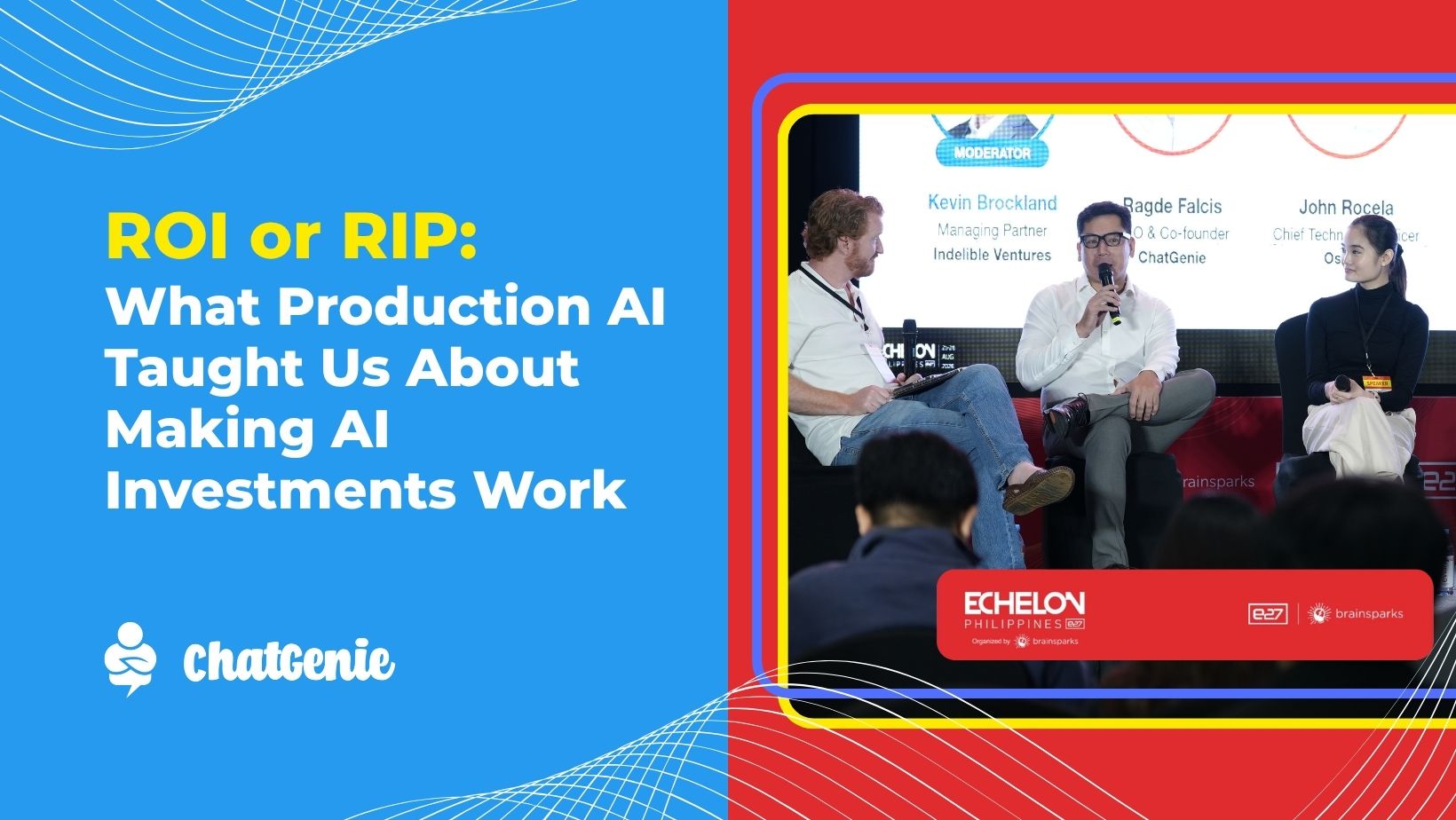
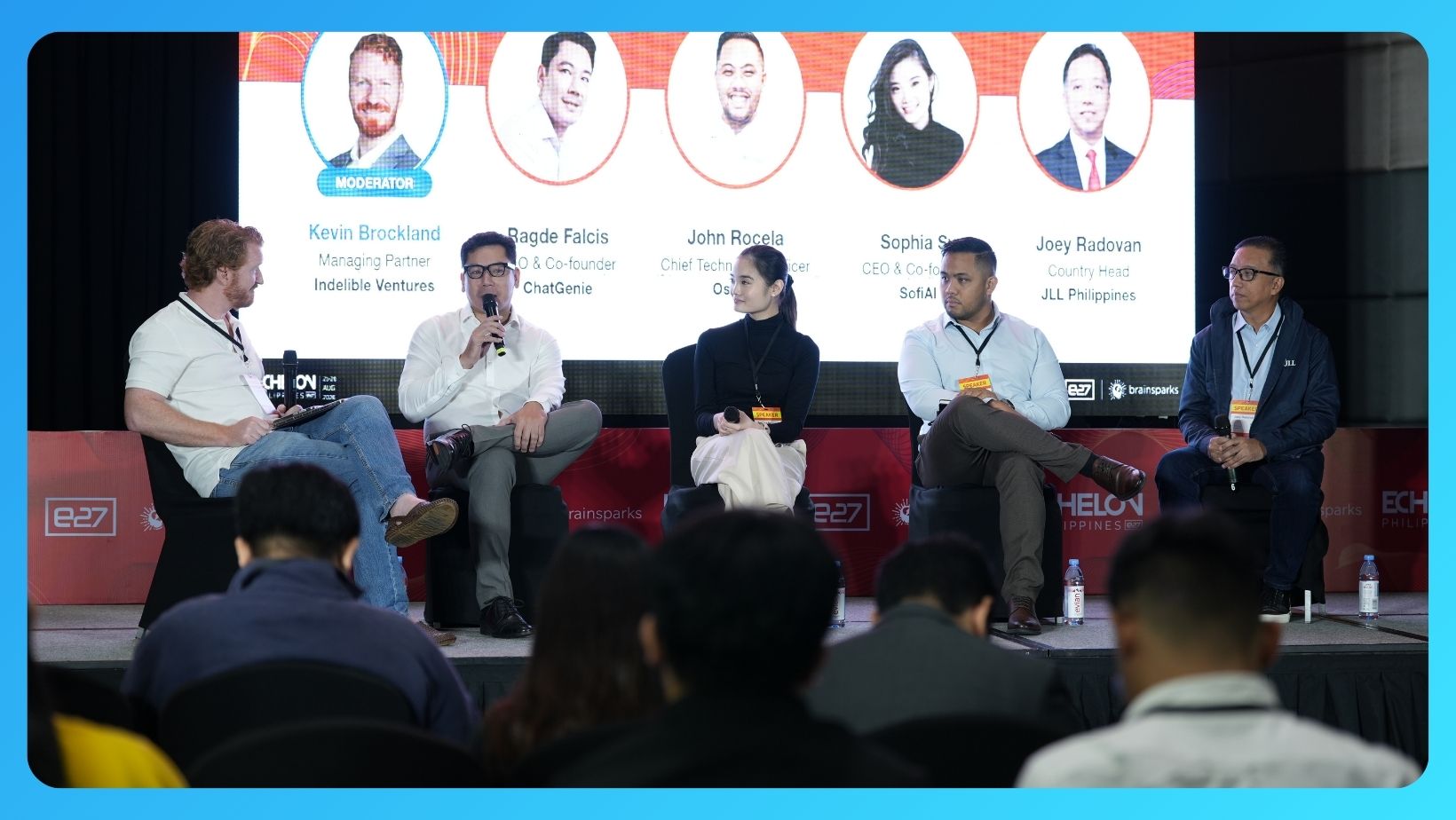
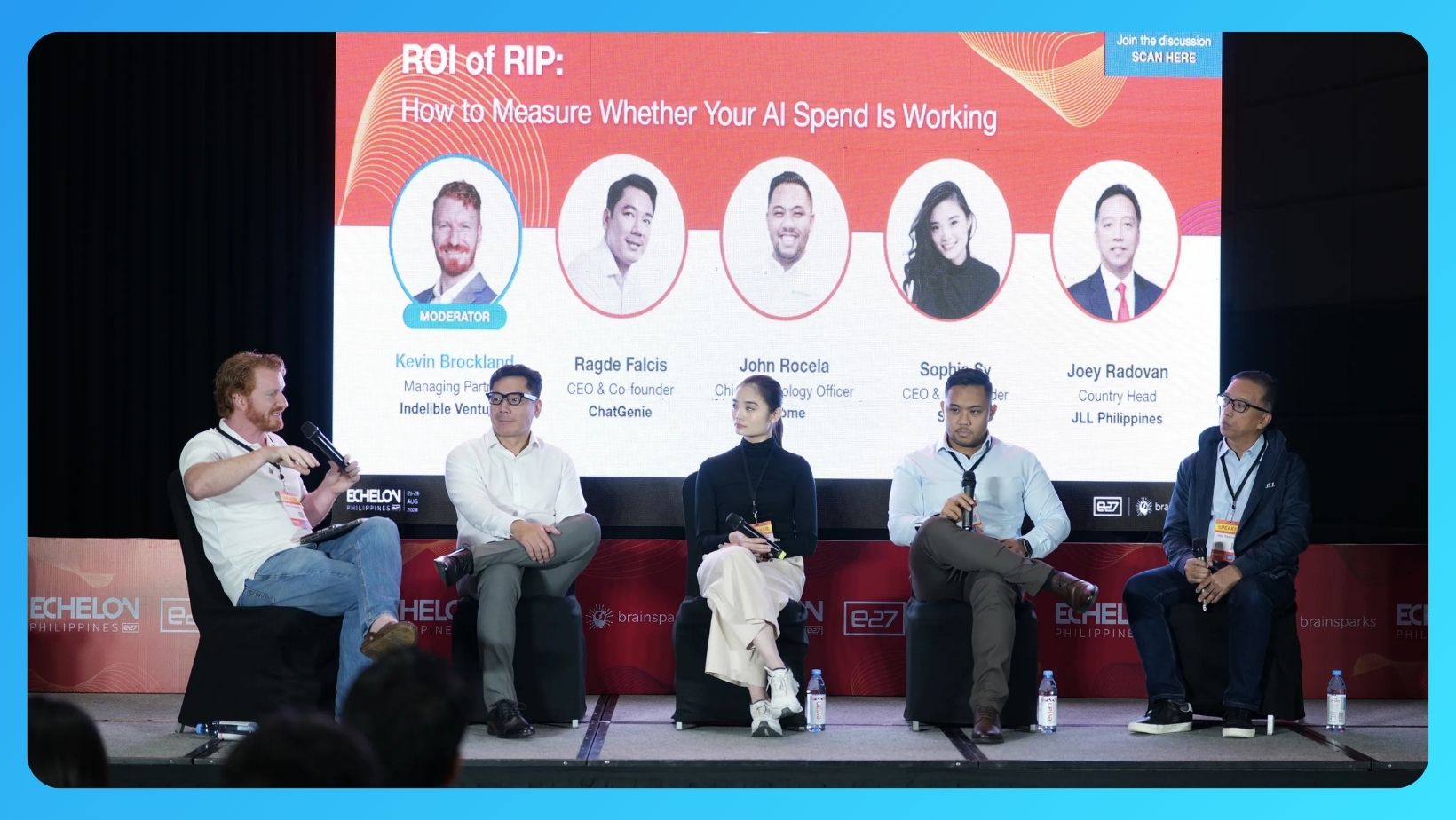
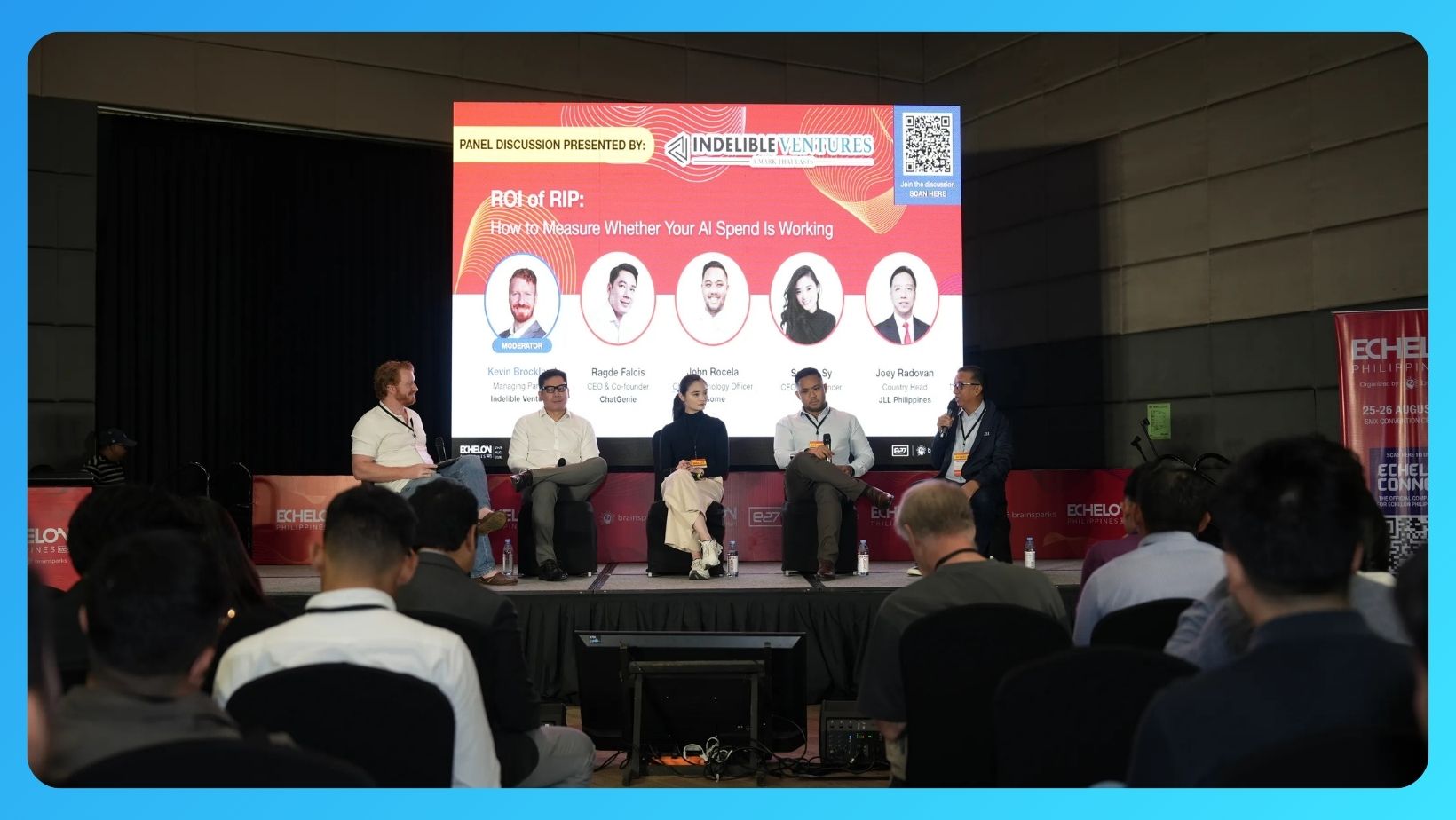
At Echelon Philippines 2026, ChatGenie CEO and Co-Founder Ragde Falcis joined the panel “ROI or RIP: How to Measure Whether Your AI Spend Is Working” to discuss a question many enterprises are now facing:
How do you know if an AI deployment is actually creating business value?
For us at ChatGenie, this is no longer a theoretical question.
Through production deployments with enterprises such as Angkas and LBC Express, we’ve seen that successful AI implementation depends less on having the newest model and more on identifying the right workflows, measuring their economics, and proving value before expanding.
1. Start With High-Volume, Repetitive Workflows
One of the clearest opportunities for AI is work that happens repeatedly and at sufficient volume.
In customer engagement, enterprises can receive large numbers of conversations involving recurring questions, service inquiries, status requests, qualification, and other predictable interactions.
These are the types of workflows where AI can create significant leverage.
In our ChatGenie deployments, the goal isn't simply to make a chatbot capable of answering questions. The system needs to understand customer intent, retrieve the appropriate company information, follow business rules, determine when human intervention is necessary, and operate consistently across real customer conversations.
When those interactions happen at scale, even incremental improvements in handling time, automation, or employee capacity can become meaningful.
This is why we believe companies shouldn't begin with:
“Where can we use AI?”
A better question is:
“Which high-volume, repetitive process is consuming significant resources today?”
2. AI Efficiency Creates New Capacity
The value of AI isn't limited to reducing operating costs.
When AI handles more repetitive work, organizations gain operational headroom.
In customer support, for example, human agents can spend less time repeatedly answering routine questions and more time handling complex cases where judgment, empathy, or intervention is needed.
That additional capacity can also be redirected toward customer retention, sales, relationship management, or entirely new services.
The same idea can extend beyond employee time. Operational efficiencies can free up budget, infrastructure, and even physical space that can be repurposed toward activities that contribute more directly to the business.
This means AI ROI shouldn't only be measured by asking:
“How much did we save?”
Companies should also ask:
“What can we now do with the capacity that AI has created?”
The upside can come from both lower operating costs and new opportunities to create value.
3. Prove ROI Before You Scale
An AI demo and a production AI system are very different things.
Once AI begins interacting with real customers, additional requirements become critical: integrations, knowledge management, guardrails, monitoring, human escalation, and continuous evaluation.
We've encountered these realities directly in putting ChatGenie into enterprise production environments.
Generating a plausible response isn't enough. We need to continuously ask:
- Was the response correct?
- Was it grounded in the company's actual information?
- Did the system follow the intended business process?
- Should the AI have handled the interaction?
- Should it have escalated to a human?
- Can it repeat that performance consistently across thousands of interactions?
This is one reason evaluation has become a core part of how we deploy AI at ChatGenie.
We don't rely solely on general model benchmarks. We evaluate models against scenarios that reflect the actual behavior expected from our production agentic workflows.
We explored this process in detail in our article, “The Agentic AI Evaluation Playbook: How We Compared GPT-5.2, Claude Sonnet 4.5, and Qwen for Enterprise Deployment,” where we documented how we tested models using production-derived scenarios, accuracy, multilingual performance, latency, and cost.
Read the Agentic AI Evaluation Playbook
This also reinforces why enterprises should be careful about scaling too early.
A practical approach is:
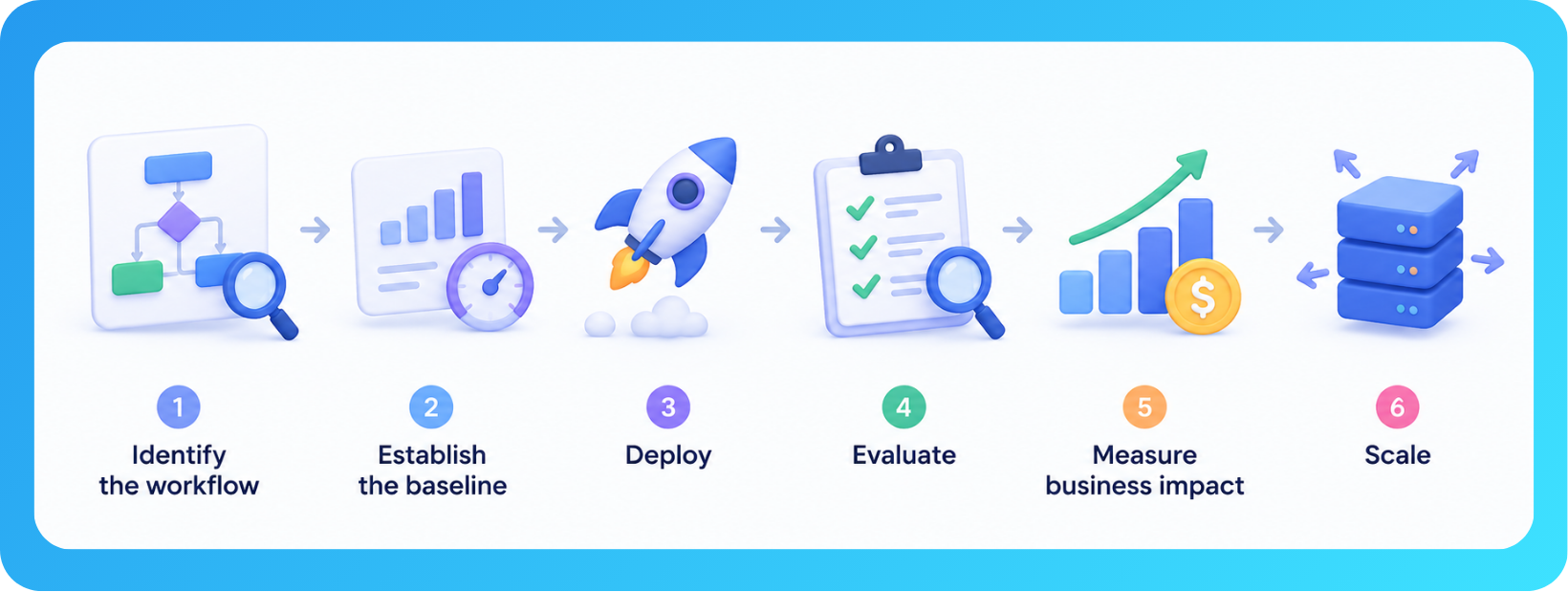
If the economics are strong for the initial workflow, there is a much clearer case for expanding into additional processes, channels, or business units.
If ROI hasn't been established, scaling can simply mean scaling cost and complexity faster than value.
From “Can AI Do It?” to “Does It Make Business Sense?”
AI models are becoming capable of doing more every year.
That means “Can AI do this?” is becoming a less useful question on its own.
The more important question for enterprises is:
“Does it make economic sense for AI to do this?”
Our experience putting ChatGenie into production with companies such as Angkas and LBC Express has reinforced that the answer starts with the workflow—not the model.
Find the repetitive, high-volume process. Understand what it costs today. Deploy AI against a measurable objective. Evaluate it continuously. Then scale when the economics make sense.
That's how enterprise AI moves from an experiment into a production system capable of creating real business value.

Exploring AI for Your Operations?
If your organization is evaluating where AI and agentic automation can generate measurable improvements in customer engagement or operational efficiency, talk to the ChatGenie team.
We can help identify workflows where automation has a clear business case, establish how success should be measured, and evaluate whether the opportunity is ready for production deployment.
.png)
.jpg)


